 |
PREHISTORIC
FINDS |
 |
Garza County
Historical Museum
119 North Ave. N. in
Post, Texas
The
twenty-six room Museum is filled with a virtual time capsule of artifacts and
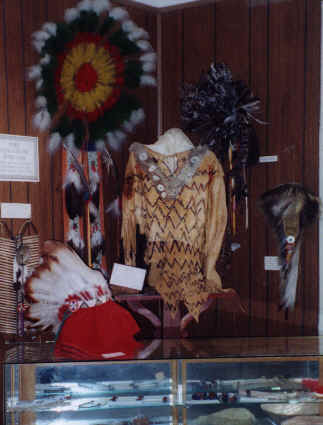
historic data, from 225 million years to the present. Click on the topics
below for the "whole story".
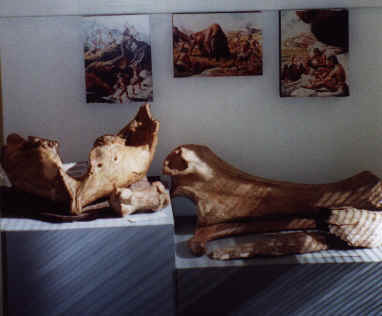
Prehistoric
Findings
The C. W. Post's
Story,
Native Americans
History of Post
& Garza County
First Area Ranches
History Time
Lines
Pictorial
History
Historical
Markers
Tabana
Yuane
Curator: Ms. Linda G. Puckett: Open Tuesdays through Saturdays: 10 AM to 5 PM
(806) 495-2207 e-mail: garzamuseum@door.net
MUSEUM EXHIBITS:
|
PREHISTORIC
FINDS |
|
 |
MILITARY
ROOM |
 |
 |
C. W.
POST: |
 |
About the Museum:
The Garza County
Historical Museum is managed by the Caprock Cultural Association and is the
property of Garza County. The goal is to interpret and preserve historical
objects, data, and to create a interesting, friendly and educational place
for the public to examine the past in order to prepare for the
future. The last few years, the museum has been renovated with
central heat/air, new carpeting, new roof, rewiring, new ceilings, and
redecorated rooms. Second floor handicapped access will be joined by
exterior handicapped access and other exterior renovations this coming year.
Historic Building:
The Garza County Historical Museum was originally the Post Sanitarium. In
1964, it was declared a Texas Historical Landmark, in 1966, the Mason Memorial
Building and in 1977 was put on the National Register of Historic
Places.
In 1911, plans for a Sanitarium, (the name today would be hospital, but in those days, you went to die in a hospital, and rested and recuperated at a sanitarium) were executed by Dr. A. R. Ponton and C. W. Post to care for the medical needs of Post's new citizens. Stone mason: "Scotty" Samson and James Napier, both Scotsmen were hired to build the structure along with many other buildings in the new town. The Colonial style was choses to represent a dominance within the community. The building, constructed of native stone had a second story veranda and a beautiful front porch adorned with four large white stone columns.
The Sanitarium opened for business in 1912, a model institution of its kind, noted as the "first hospital in this part of West Texas" (within a range of twenty-four counties) and the best equipped hospital this side of Fort Worth. Equipment included a laboratory, x-ray room, operating and sterilizing room. The 25 rooms each had its own private baths, central steam heat, electricity and electric call bells. There were two wards, male and female with adjoining baths plus private and professional consulting rooms.
Doctors on staff were: Drs. A. R. Ponton (Chief Surgeon) A. R. Surman, D. C. Williams, and G. G. Castleberry. The hospital also served as a nurses training school.
By 1917, WWI took its toll on the Post medical community as the doctors were called to serve their country. Inevitable with all the doctors in military service, the Post Sanitarium closed in 1918. Dr. Ponton, the only doctor left moved to Lubbock to start another hospital. Lubbock General - later to become Methodist, which is now the part of the Covenent Care.
When the doctors finally returned home, everything had changed so much, the facility had detoriated, staff had disappeared, the heating plant was out of date, plumming had gone wackey, other hospitals were in the area. Drs. Surman, Williams, and Castleberry formed a partnership and started their prartice in downtown Post. Castleberry moved to Lubbock eventually and Surman and Williams practiced medicine together for the balance of their careers. The former offices of the duo is now used by the Senior Citizens of Post.
Later the building, was purchased by Marshall Mason, who converted the building into the Colonial Apartments. The property was donated to Garza County in 1967 to be used as a museum by their children, Marshall Mason Jr. and Mrs. James Minor after their parents death.
The building of a Museum:
CCA becomes invloved: